Page 1 of 2
Shingle bones *Caution*
Posted: Wed Oct 19, 2011 2:43 am
by Nae
Posted: Wed Oct 19, 2011 3:31 am
by Coomassie
Wow, that is soooo cool. I want to come live with you in shingleland. Thanks for posting.
Posted: Wed Oct 19, 2011 10:58 am
by Zach
That is excellent! Thank you for sharing, Nae!
Posted: Wed Oct 19, 2011 10:59 am
by Linnea
amazing photos!
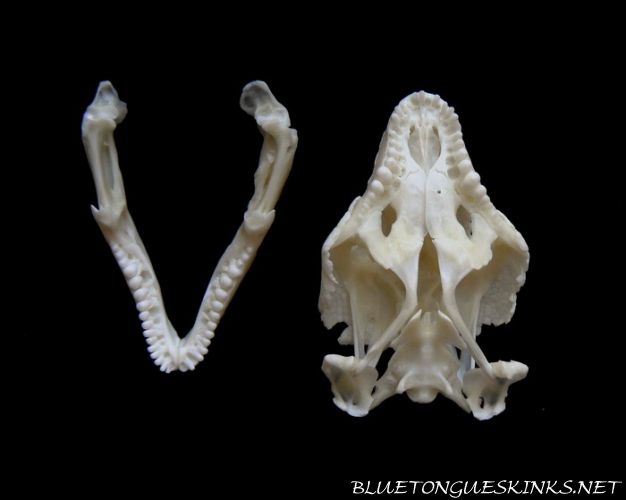
why are there holes under the teeth? :O
Posted: Wed Oct 19, 2011 2:14 pm
by missmacabre
Awesome pics, really interesting!
Posted: Wed Oct 19, 2011 2:31 pm
by Spindown
interesting, thanks for sharing!
poor shingle though

everything has to die sometime i suppose. at least we can learn from its death.
Posted: Wed Oct 19, 2011 2:55 pm
by Katrina
The jaw bone with teeth is fascinating. Thanks for taking the time to share these!
Posted: Wed Oct 19, 2011 3:53 pm
by Alioop
Thanks Nae!! Those photos are awesome!
Posted: Wed Oct 19, 2011 5:02 pm
by Karen
Awesome pictures. The two bones you said you think were tail or legs are definitely legs. The whiter bone looks like an ulna to me, so forearm, and the larger bone with the ball joint looks to be a humerus or femur. I know human osteology, but not skink though, lol.
Posted: Wed Oct 19, 2011 8:03 pm
by Nae
Linnea, Im not dental or skeletal expert, but Id say the holes are from where the gums used to be. And some have more holes then others probably because the bottoms of the teeth are so thin and fragile, theyve probably just been worn away~
And Karen, I had a feeling they were legs, but the brown one seemed a bit long so I wasnt 100%. But then again, for movability, they certainly wouldnt have something that long in their tail now would they

. (Do they even have bones in their tail??) Thanks though, Ill update the post!
Good to know others found it interesting, and not just me!

Posted: Wed Oct 19, 2011 8:22 pm
by Karen
I did a Google search and found a picture of a Chinese Skink, which looks similar at least. Looks like maybe the spine looking bones might actually be the tail?
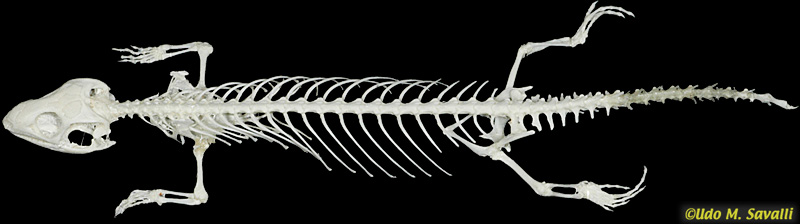
I love osteology.

Posted: Wed Oct 19, 2011 8:30 pm
by El Lobo
Thank you for posting these Nae, they are very informative.
The pictures support the premise I have put forward on a couple of thread that the teeth are actually connected to the jawbone and not just little bony nubs and accordingly should be given appropriate consideration when choosing diet:-
"The teeth are not connected by a socket but rather are attached to the caudal side of the mandible and maxilla, being classified as either pleurodont or acrodont teeth. Pleurodont are teeth which can be replaced, whereas acrodont teeth are usually only replaced in young. I don't know which type blueys have but I would suggest they are acrodont teeth.
As the teeth are supported by membrane they can be susceptible to periodontal disease including stomatitis. One good reason to not have them on a diet of mushed foods but rather to allow them to exercise the gums by chewing firmer foods."
Bones left in the hot sun will dry out rapidly, but there is something I see in these pictures that makes me wonder if this particular skink may have had a form of MBD. In the second picture the jaw bone is displaying significant signs of porosis, possibly caused by insufficient calcium in the diet when younger. Briefly, when there is insufficient calcium available to the body either through incorrect diet or inadequate D3 to metabolise, the body will draw from the calcium stored in the body i.e. the bones, causing them to structurally weaken through porosis, which is that honeycomb effect that can be seen here. It is not a condition exclusive to reptiles but also presents in mammals (including humans) where is is mostly classified as rickets. The problem is that all the major organs need a constant, albeit small, amount of calcium to be carried to them in the bloodstream. For example, calcium is essential to the heart to allow regulation of the heartbeat.
Sorry, this is becoming a bit of a rant, but it is an issue I see quite a lot in small mammals and become a bit frustrated by those (including some vets) who refuse to accept that MBD can affect any species other than reptiles. Young otherwise healthy animals should not have osteoporosis.

The above is just IMO.
Posted: Wed Oct 19, 2011 8:34 pm
by critterguy
Sure thats not just blood supply to the teeth/gums? It seems like some of those teeth are "socketed" more than others.
Posted: Wed Oct 19, 2011 8:45 pm
by Nae
Your picture isnt working Karen
However, I looked at skeletons of other reptiles, and it appears that their spine travels into their tail, and the only difference bone wise is that they gradually get smaller, so they could very well be from the tail region of the spine~
Feel free to use the photos in any way you wish Lobo if you feel you would like to use them in anyway to support your information.
I originally found this skink about 2 years ago lot long after it died. While there was no external signs of MBD, there was no clear indication at all of what could have caused its death, especially since it was fairly young. (And simply gorgeous may I add - chocolate brown with perfect scales and proportions) So could calcium deficiency be a possible cause? And its got me thinking, would anyone have any idea as to where wild blueys would obtain their calcium?
Posted: Wed Oct 19, 2011 9:03 pm
by Karen
Sorry about that, here is a straight image link to it:
http://www.savalli.us/BIO370/Anatomy/An ... nPlain.jpg
Posted: Wed Oct 19, 2011 9:08 pm
by El Lobo
Nae- do you have any other photos of that jaw?
If possible, I would like to see anything that shows clear identification of the caudal (cheek) side and the lingual (tongue) side of either the maxilla or mandible.
Posted: Wed Oct 19, 2011 9:11 pm
by Nae
I have this

But otherwise I can go get some more sometime today?
Posted: Wed Oct 19, 2011 9:18 pm
by Karen
Not sure if these might help or not for comparison:
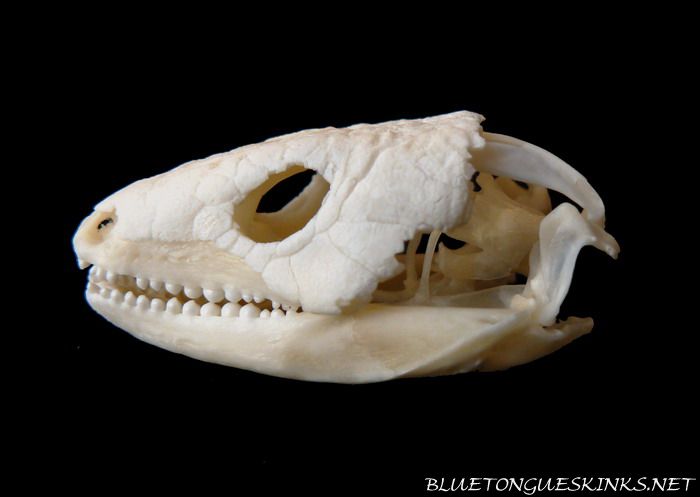
Both from
http://www.biolib.cz/en/taxon/id500913/
Posted: Wed Oct 19, 2011 10:08 pm
by El Lobo
Thanks Nae and Karen.
I wanted to check against information I researched a while back about skinks' teeth. That information disclosed skinks teeth are not socketed in the classic mammalian manner with a root on either side of the jaw bones, but rather by a simpler connection only on the caudal side and retained in place by membrane. It is possible the pockets are for blood supply, although to me they could also be caused by porosity because of their irregularity.
Posted: Wed Oct 19, 2011 10:54 pm
by Nae
I snagged a few more. It was way to hot out to sit in the grass and take photos like I did yesterday, so the quality isnt the best as I brought them inside and thus couldnt use the flash.
http://s1093.photobucket.com/albums/i43 ... e%20Bones/
I also found a fragment of the skull which had the top teeth attached. The teeth are definitely attached on one side and then hollow underneath.
And as you can tell by one of the photos...I got distracted....But he was so cute!!


