

Since this thread has attracted some well-informed nigrolutea keepers and field herpers, I thought that we could tweak the Blotched species profile even further.
We can edit the section as a group to get a consensus of opinion and argue points that are contentious.
What do members think about this idea (especially Zach - as we will need you to edit it please
 ).
Here's the species profile as it stands:-
The Blotched Blue Tongued Skink — (T. nigrolutea • Quoy & Gaimard, 1824)
(Also known as the Southern blue tongued skink)
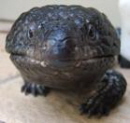
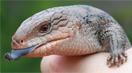
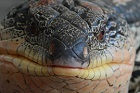
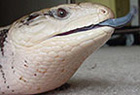
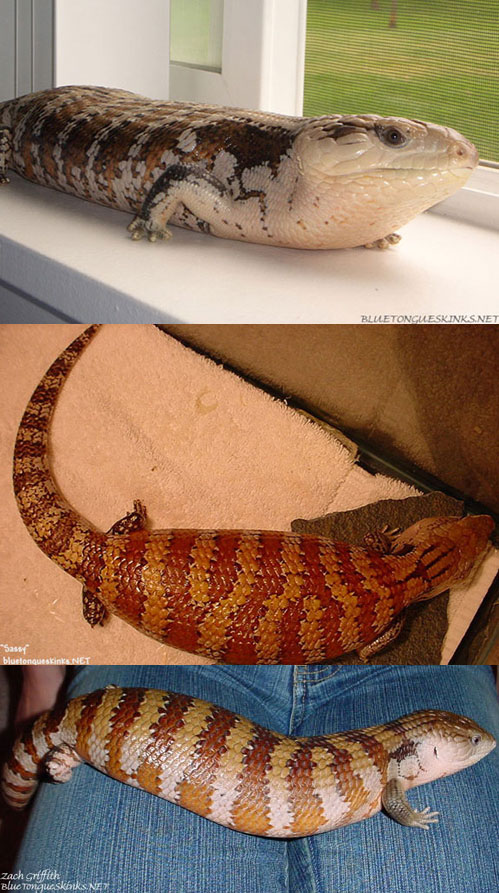
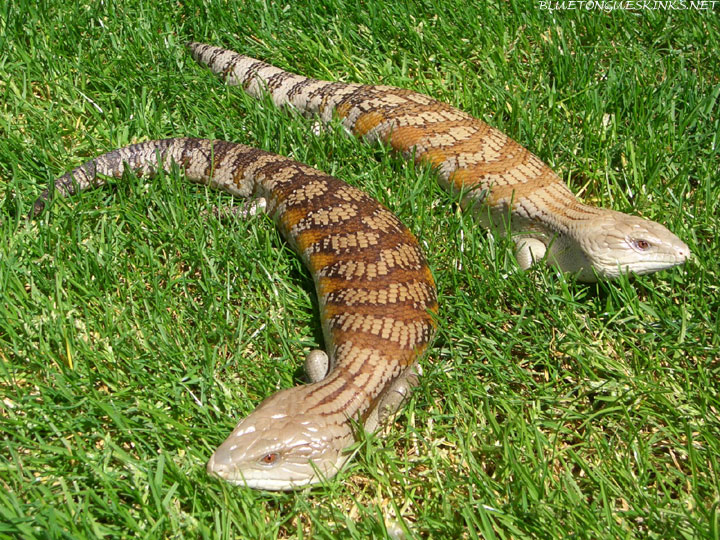
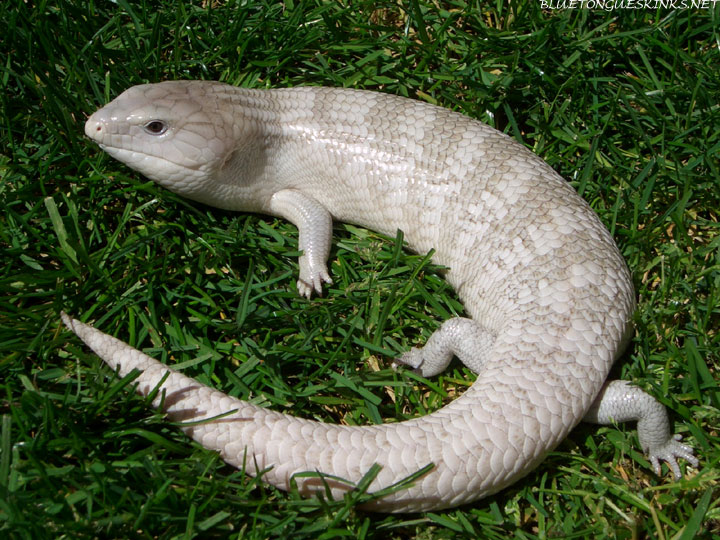
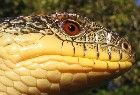
This is a blue tongue species that inhabits Australian coasts, forests, and dry plains. The Blotched is once again one of the more rare breeds in captivity. The Blotched used to be quite common with reptile hobbyists years ago, but have since relinquished in the pet trade. They are unique among blue tongues in that they consist of mainly one solid color (instead of stripes), and display 'blotches' scattered up and down their back and tail. Many "blotchies" (a popular nickname) also have very fat tails which are thick all the way down until abruptly coming to a point. They reach lengths of in and around 18 inches, usually give birth to consistently 8-10 offspring, and are completely confined to lower eastern Australia and Northern Tasmania. There are two popular named 'phases' of blotched; alpine and lowland. These phases are not diverse enough to be considered subspecies, but are usually quite distinctive. The top three photographs demonstrate the 'alpine phase', and the fifth displaying a 'lowland'. Usually, the main difference is color. The alpine's are usually characterized as being much lighter/brighter with colors such as oranges and even pinks, while the lowlands usually consist of darker shades of browns, grays, and other darker markings. The alpines also often have an overall yellow tinged shade and checkered forelegs. Sometimes the alpines are referred to as 'highlands'.
Distinguishing marks:
• No stripes—body is assorted with multitudinous irregular shaped "blotches"
• Often displays a myriad of tiny flecks on and around the face
• Highland form is capable of displaying a vibrant pink coloration
• Commonly displays a very fat tail
To get things started...
1)
"...inhabits Australian coasts, forests, and dry plains".
Could we add heathland, as I've found quite a few nigrolutea in both coastal and mountain heathland habitat?
I also think that "dry plains" is a little misleading and reckon that grasslands would be a better term to use (or should I just let this one go?
 ).
2)
completely confined to lower eastern Australia and Northern Tasmania.
- this should be changed to the coast and ranges of south-eastern Australia and the species distribution in Tasmania should include eastern and south-eastern regions of Tasmania; as they occur down the east coast to Hobart and even further south.
3)
...they consist of mainly one solid color (instead of stripes).
No stripes—body is assorted with multitudinous irregular shaped "blotches".
No Tiliqua sp. have stripes as such and are more correctly called bands. I know I'm being pedantic here but it's a valid point.
4)
display 'blotches' scattered up and down their back and tail.
- the blotches don't continue all the way down the tail but become bands. Quite often the blotches continue onto the base of the tail but never more than about a third of the way down in my experience.
The tail is primarily banded.
What does everyone think about these points and making these changes?
Cheers