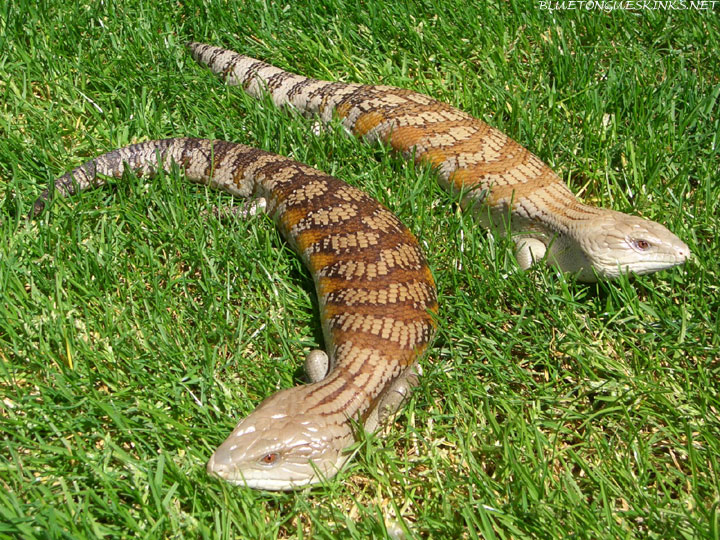
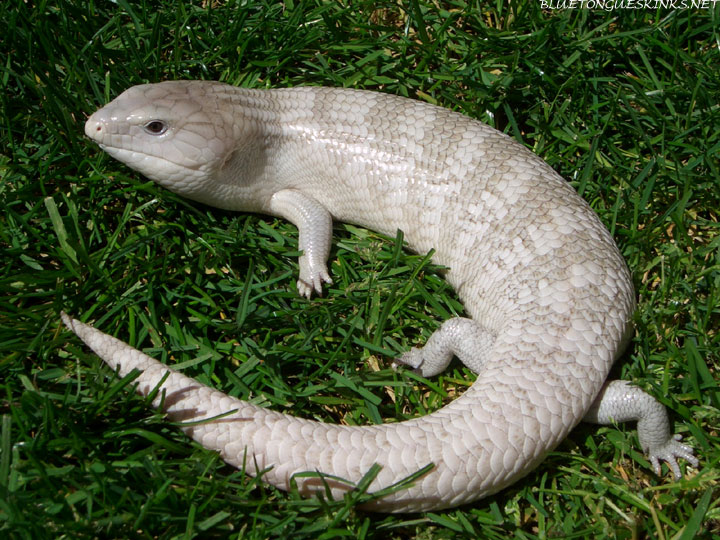
Misinformation re: Blotched Bluey on site

Everything Blue Tongues! Have a question? Just got a BTS and want to introduce yourself? This is the place!
Forum rules
In this forum all are welcome to ask blue tongue skink-related questions, share information, ideas, tips, experiences, and pictures with fellow BTS enthusiasts.
If you are wondering if your BTS is acting normally or might be sick, this is where you can get help with that.
This is also where you can have some FUN while sharing the enjoyment you get from your blueys!
User avatar
tiliqua
Blotched Bushman
Blotched Bushman
Posts: 88
Joined: Thu Jan 19, 2006 8:44 pm
Country:
Location: Oz

Misinformation re: Blotched Bluey on site

Postby tiliqua » Sat Nov 17, 2007 3:29 pm

Hi all

There's incorrect information in the Blotched Blue-tongue section of this site regarding habitat for this species.

Here's the passage that is incorrect:-
This is a blue tongue species that is not only found in arid regions, but Australian coasts, forests, and dry plains.


This species is NOT an arid zone species!
They're found in sclerophyll forests, woodland and open grassy areas adjacent to these forests. They're also found in rural areas near these habitats, heaths, urban and even some suburban areas.

As this site is so popular worldwide amongst Blue-tongue enthusiasts and keepers I felt it important to correct this error, as it may effect the captive husbandry and management of this species.
Last edited by tiliqua on Sun Nov 18, 2007 6:07 am, edited 3 times in total.
User avatar
Bird_Brain
The Happy Hitman
The Happy Hitman
Posts: 4079
Joined: Sat Nov 04, 2006 7:11 pm
Country:
Location: Warren, Indiana

Postby Bird_Brain » Sat Nov 17, 2007 4:13 pm

I am in no way saying you are wrong or right, however, to add some credentials to your post maybe sign your real name? Some info to back this up? Your experience with BTS and in particular Blotchies? Just an idea.
Brad
User avatar
Zach
Grand Cicada
Grand Cicada
Posts: 7550
Joined: Mon Jan 12, 2004 8:38 pm
Country:
Location: Orygun
Contact:

Postby Zach » Sat Nov 17, 2007 5:19 pm

Hey Tiliqua, I've talked with lots of people from AU (and elsewhere) about this, and can't seem to get a 100% straight consistent answer so I've just left it alone.... :chin: but my apologies if it seems I was ignoring your request. I really appreciate your concern over it and thank you for bringing it up again.

Can anyone else comment about their habitat? Geoff?

+ 2.2 Irian Jaya (Slurpy, Nona, Sassy, Cool Moe Dee)
+ 1.1 Eastern (Eugene, Enzo)
+ 1.2 Northern (Niko, Pearl, Peach)
+ 1.0 Tanimbar Island (TQ)
User avatar
tiliqua
Blotched Bushman
Blotched Bushman
Posts: 88
Joined: Thu Jan 19, 2006 8:44 pm
Country:
Location: Oz

Postby tiliqua » Sat Nov 17, 2007 6:19 pm

Thanks for your replies Zach and Brad.

Zach, whoever told you that Tiliqua nigrolutea was found in arid areas was wrong.


I live in south eastern Australia right on the edge of the known range and have collected this species from many areas but never in an arid area. Nor have I ever heard of it being found in any arid area.
I've read every reference I could lay my hands on about this species (I'm very well read) and not one text records them as being from arid areas.

My apologies for going onto the public forums about this Zac but as you know I've tried to get you to make the change numerous times and have become very frustrated.
I don't know what more I can do. :?

I've kept this species for many years and it is my personal favourite.
I care deeply about this species welfare in general and thought that the misinformation (as I know it to be) is likely to mislead keepers into thinking they can tolerate dry, waterless conditions. In fact even Tiliqua s. scincoides appears to tolerate drier conditions better than T. nigrolutea as scincoides has been found in semi-arid localities.

T. nigrolutea is the only member of the genus not found in semi-arid areas (let alone arid!).

Furthermore, there are no arid areas within the natural known range of the species i.e NSW or Victoria which is where T. nigrolutea is primarily found (Also Tasmania and extreme south eastern South Australia. Needless to say also not arid areas).
Last edited by tiliqua on Sun Nov 18, 2007 6:09 am, edited 1 time in total.
User avatar
Zach
Grand Cicada
Grand Cicada
Posts: 7550
Joined: Mon Jan 12, 2004 8:38 pm
Country:
Location: Orygun
Contact:

Postby Zach » Sat Nov 17, 2007 7:38 pm

Not at all, I'm glad you posted public! Hopefully some other experienced individuals will add their 2 cents. I value the opinions of enthusiasts who actually live there. I'd like to revamp EACH species section to include much more detailed information. As of now, it's really what this site is lacking -- we have loads of care information, but really only basic specific species information.

+ 2.2 Irian Jaya (Slurpy, Nona, Sassy, Cool Moe Dee)
+ 1.1 Eastern (Eugene, Enzo)
+ 1.2 Northern (Niko, Pearl, Peach)
+ 1.0 Tanimbar Island (TQ)
User avatar
tiliqua
Blotched Bushman
Blotched Bushman
Posts: 88
Joined: Thu Jan 19, 2006 8:44 pm
Country:
Location: Oz

Postby tiliqua » Sun Nov 18, 2007 12:05 am

The Australian Museum http://www.amonline.net.au/factsheets/b ... lizard.htm states:-
the Blotched Blue-tongue (Tiliqua nigrolutea) is restricted to highland areas from the Victorian border to the Blue Mountains.

There are no arid highland areas in Australia.

Harold Cogger (a leading Australian herpetologist) writes that the Blotched Blue-tongue (Tiliqua nigrolutea) "is found in wet & dry sclerophyll forest, montane woodlands and coastal heathlands".

None of these types of vegetation are found in arid (or semi-arid) areas.

Wilson and Swan (2003) write that this species is found in...
cool temperate forests, woodlands and heaths from nthn Tas to Blue Mtns, NSW.


Zac, can you site any authoritative text or reference that includes arid areas as a known habitat type?


.
User avatar
Blotch
Bluey Addict
Bluey Addict
Posts: 3230
Joined: Mon Feb 16, 2004 2:10 am
Country:
Location: South Eastern Victoria, Australia.

Postby Blotch » Sun Nov 18, 2007 8:45 pm

ok - ive edited this cuz I keep thinking of things to add so this is the last edit!

You are partly right. Blotchies aren't found in desert areas, but if you continue to read - you will see arid areas in which they are found.

Tiliqua, You are incorrect with your call about there being no Arid Highland areas in Victoria. The Snowwy Mountian area has VERY dry areas, especially of late with the drought. But in general, Places like Mansfield get very dry, and it's not uncommon to see blotchies, easterns, and stumpies. Reason for this is the bushland. You will also find blotchies all along the Murray river. Granted they thin out in areas, but they are around. Places like Cobram (VIC)/Barooga (NSW) - Shepparton (VIC) all have Blotchies, and all are quite dry, but they do have water sources, and they also have bushland.
Last edited by Blotch on Sun Nov 18, 2007 8:55 pm, edited 2 times in total.
~|=|>-

"you want what!? where!?"

2.1.0 T.S. Intermedia (Kimberleys)
1.0 T.S. Intermedia (N.T.)
6.0.3 T. Nigrolutea (VIC Lowlands)
3.1.11 T. Scincoides (VIC & NSW)
User avatar
Geoff Gates
Bluey Whisperer
Bluey Whisperer
Posts: 500
Joined: Wed Apr 21, 2004 5:09 am
Country:
Location: SurfCoast, Australia

Postby Geoff Gates » Sun Nov 18, 2007 8:51 pm

tiliqua,

It's obvious that the Australian Museum's statement of the distribution of T. Nigrolutea is INCOMPLETE.

They are definitely not restricted to highland areas.

I prefer Cogger's and Wilson & Swan's statments.

But, I'd be interested to know if any blotchies have been found in the arid regions of the Little Desert N.P. in North Western Victoria.
Geoff.
User avatar
Blotch
Bluey Addict
Bluey Addict
Posts: 3230
Joined: Mon Feb 16, 2004 2:10 am
Country:
Location: South Eastern Victoria, Australia.

Postby Blotch » Sun Nov 18, 2007 8:58 pm

Geoff Gates wrote:They are definitely not restricted to highland areas.


hehe - Mornington Peninsula isn't highland area, and we get HEAPS of them!

Do you think people forget that there are 2 varieties of Blotched?


For those that don't know they are: Alpine and Lowland.
~|=|>-

"you want what!? where!?"

2.1.0 T.S. Intermedia (Kimberleys)
1.0 T.S. Intermedia (N.T.)
6.0.3 T. Nigrolutea (VIC Lowlands)
3.1.11 T. Scincoides (VIC & NSW)
User avatar
Lisa
Blue Mountains Beauty
Posts: 1072
Joined: Wed Jan 05, 2005 4:04 pm
Country:
Location: Blue Mtns, NSW, Australia

Postby Lisa » Sun Nov 18, 2007 9:33 pm

If I had to put into print the areas where blotchies are predominantly found, I would leave out the word arid.

Having said that, much of Australia is in a prolonged drought, and many areas that may not normally be considered arid are currently experiencing pretty arid conditions. Since different areas in Australia at different times always seem to be experiencing some type of drought, this may influence writers depending on when they have published their works.

Also, the term Alpine is generally used to distinguish the blotchies that have the more pink, red or orange blotches as opposed to the lowland types that aren't as coloured, however that description is also misleading because 'Alpine' blotchies (those with the high pink/red/orange spots) are found here in the Blue Mtns (Katoomba upwards) and this is not an Alpine area.

So then if people start to call these ones, for example, a Lithgow form of alpine blotch or Bathurst form, or Mt Vic or Nth Katoomba form, does this then make them another type again?

One brand: Blue Tongue Lizid.
....many, many, many flavours to choose from :wink:
1 Eastern, JUBBY, born January 2004
1 Blotchie, RALPHIE, born March 2006
1 Nutjob, SANTOS L HALPER (SANTOS), born February 2006
1 Shingle SHE'S THE FASTEST, born Feb 2008
NomadOfTheHills
The Scout
The Scout
Posts: 1342
Joined: Sun Apr 25, 2004 2:07 pm
Country:

Postby NomadOfTheHills » Sun Nov 18, 2007 10:06 pm

Lisa wrote:So then if people start to call these ones, for example, a Lithgow form of alpine blotch or Bathurst form, or Mt Vic or Nth Katoomba form, does this then make them another type again?

One brand: Blue Tongue Lizid.
....many, many, many flavours to choose from :wink:


Ah, you my friend, are a lumper :D
User avatar
Lisa
Blue Mountains Beauty
Posts: 1072
Joined: Wed Jan 05, 2005 4:04 pm
Country:
Location: Blue Mtns, NSW, Australia

Postby Lisa » Sun Nov 18, 2007 10:23 pm

NomadOfTheHills wrote:
Lisa wrote:So then if people start to call these ones, for example, a Lithgow form of alpine blotch or Bathurst form, or Mt Vic or Nth Katoomba form, does this then make them another type again?

One brand: Blue Tongue Lizid.
....many, many, many flavours to choose from :wink:


Ah, you my friend, are a lumper :D


Quite simply, I am too dumb to remember too many things!
The old Homerism, 'every time I learn something new it pushes something old out of my brain'. :lol:

Seriously but, I think alot of species or subspecies or whatever they're called, seem to be based purely on the different look of an animal and what part of a country they reside in, and not because of physical or biological differences. And I don't think that's right. Like, if I end up on the news, I shouldn't be referred to as a blue-eyed blonde person who lives in NSW, I am just a person.

To make a separate species or whatever just because an animal has different colours or lives in a different area, I think that's bollocks. Sure, they may have different needs that are determined by the area that they live in, but it doesn't mean they are a different animal!

But I don't intend to turn this into some kind of scientific debate with you! I'm on holidays! And besides, I know you'll cream me! That's why I prefer animals to people. Even though I know they're smarter than me, they can't ever prove it :lol:
1 Eastern, JUBBY, born January 2004

1 Blotchie, RALPHIE, born March 2006

1 Nutjob, SANTOS L HALPER (SANTOS), born February 2006

1 Shingle SHE'S THE FASTEST, born Feb 2008
User avatar
Fatal_S
Take Flight
Take Flight
Posts: 8391
Joined: Mon Dec 05, 2005 3:40 pm
Your Facebook name: Mel's Exotics
Country: Canada
Location: Manitoba
Contact:

Postby Fatal_S » Sun Nov 18, 2007 11:26 pm

Hmm, I wonder if the BTS sub-species we have defined all share the same genetic makeup, or if there are some differences between types. I was just thinking of this in terms of dogs, and I may be totally off, but I thought different sub-species of dog (German shepard vs poodle) have some big differences in their DNA? If this is right, might BTS (esp. Indonesian species vs Aussie species) have variences in their DNA?

Maybe someone else can tell me how wrong or confused I am. I'm with Lisa, in a scientific debate, not only would I get creamed, I'd get churned and made into butter as well :P
User avatar
Lisa
Blue Mountains Beauty
Posts: 1072
Joined: Wed Jan 05, 2005 4:04 pm
Country:
Location: Blue Mtns, NSW, Australia

Postby Lisa » Sun Nov 18, 2007 11:55 pm

Yeah see people counter my (totally up-front, admittedly unedumacated) thoughts with 'What about dogs? They're all different and have different names'.

But dogs, as well as cats, cattle, sheep, pigs and other livestock are domesticated animals; they are designer animals. Since pre-historic times these animals have been specifically bred to have traits desirable to their function. Breeding out the horns in sheep and goats and cattle to make them easier to farm, super woolly sheep (modern sheep will die if they aren't shorn regularly) terrier dogs having strong jaws to catch and kill, horrid little lapdogs bred to appeal to the vulgarity and decadence of the 17th & 18th century wealthy, dogs with super long coats for cool climates etc. I know nothing about DNA but it is clear that, dogs for example, do have noticeable differences between the breeds.

And I think that's totally different to wild animals that have evolved naturally and due to natural occurences. If the evolution occured to enable them to live comfortably in their immediate environment then I don't think that the same lizard, just because they're grey and tan on the east coast, spotty in cool climates, speckly in the Kimberley etc should be classed separately.

See, told you I am dumb :lol:
----------

Anyway, this is about whether blotchies live in arid areas, and I agree with Tiliqua and would have to say 'not commonly' and that it may be misleading to prospective keepers who interpret that as keeping them on desert sand and with super hot basking temps.

Zoochie, only one way for you to be 100% accurate with your thoughts .... come on down and see for yourself :lol:
1 Eastern, JUBBY, born January 2004

1 Blotchie, RALPHIE, born March 2006

1 Nutjob, SANTOS L HALPER (SANTOS), born February 2006

1 Shingle SHE'S THE FASTEST, born Feb 2008
User avatar
Zach
Grand Cicada
Grand Cicada
Posts: 7550
Joined: Mon Jan 12, 2004 8:38 pm
Country:
Location: Orygun
Contact:

Postby Zach » Mon Nov 19, 2007 2:37 am

Lisa wrote:
Zoochie, only one way for you to be 100% accurate with your thoughts .... come on down and see for yourself :lol:


BINGO! All of my information comes from people first, texts second. What if I printed a book that stated Blotched are found in arid regions? Am I RIGHT just because I put it in a book? A lot of people cite lines in books to disprove an idea (blotched being found in arid regions in this case). Some people who write books might not have extensive knowledge on Blotched in particular, but reptiles in general, and even yet again....some of the information could very well be outdated.

I like to talk to the people who actually see the animals and are truly interested and keep them. I have found that MUCH of what is printed about BTS is inaccurate and based many times on one's own opinion.

+ 2.2 Irian Jaya (Slurpy, Nona, Sassy, Cool Moe Dee)
+ 1.1 Eastern (Eugene, Enzo)
+ 1.2 Northern (Niko, Pearl, Peach)
+ 1.0 Tanimbar Island (TQ)
User avatar
tiliqua
Blotched Bushman
Blotched Bushman
Posts: 88
Joined: Thu Jan 19, 2006 8:44 pm
Country:
Location: Oz

Arid zone map of Australia

Postby tiliqua » Mon Nov 19, 2007 6:13 am

As can be seen by these two maps, the arid region of Australia is nowhere near the known range of Tiliqua nigrolutea:-

CSIRO map of arid regions of Australia.
Image

Recorded sightings of Tiliqua nigrolutea by Museum Victoria.
Image
Last edited by tiliqua on Mon Nov 19, 2007 9:05 am, edited 1 time in total.
User avatar
tiliqua
Blotched Bushman
Blotched Bushman
Posts: 88
Joined: Thu Jan 19, 2006 8:44 pm
Country:
Location: Oz

Postby tiliqua » Mon Nov 19, 2007 6:46 am

Geoff Gates wrote:tiliqua,

It's obvious that the Australian Museum's statement of the distribution of T. Nigrolutea is INCOMPLETE.

They are definitely not restricted to highland areas.

I prefer Cogger's and Wilson & Swan's statments.

But, I'd be interested to know if any blotchies have been found in the arid regions of the Little Desert N.P. in North Western Victoria.

You're quite correct about the Australian Museums incomplete statements Geoff. :oops:
The statement about nigrolutea being restricted to highland areas is only true in the northern portions of their range, i.e the Central Tablelands of NSW. Therefore it's only a partially correct statement about the Alpine form alone. :doh:

According to CSIRO's map, far NW Victoria is zoned as semi-arid at best, not arid.
So unless you know otherwise and there's an isolated pocket of arid lands in NW Victoria, there are no truly arid zones in Victoria. :?
However, it looks like there's been no sightings of T. nigrolutea anywhere near NW Victoria anyway.

So whilst I concede that this species is not restricted to highland areas in the south of their range, I stand by my assertion that no T. nigrolutea (both forms) are found in arid zones.
User avatar
tiliqua
Blotched Bushman
Blotched Bushman
Posts: 88
Joined: Thu Jan 19, 2006 8:44 pm
Country:
Location: Oz

Postby tiliqua » Mon Nov 19, 2007 7:50 am

Blotch wrote:
You are partly right. Blotchies aren't found in desert areas, but if you continue to read - you will see arid areas in which they are found.

Tiliqua, You are incorrect with your call about there being no Arid Highland areas in Victoria. The Snowwy Mountian area has VERY dry areas, especially of late with the drought. But in general, Places like Mansfield get very dry, and it's not uncommon to see blotchies, easterns, and stumpies. Reason for this is the bushland. You will also find blotchies all along the Murray river. Granted they thin out in areas, but they are around. Places like Cobram (VIC)/Barooga (NSW) - Shepparton (VIC) all have Blotchies, and all are quite dry, but they do have water sources, and they also have bushland.


Blotch, I strongly disagree with you (as would many others) that there's truly arid highland areas in the Snowy Mountains. :shock:
Just because an area is "very dry" or undergoing temporary drought, as most of Australia does at some time or another, it does not make it an arid area.
I don't want to get too much into pedantic semantics here but truly "arid" areas are not found in the Snowy Mountains!

CSIRO's Centre for Arid Zone Research defines arid and semi-arid as:-
Put simply, the arid and semi-arid lands are those remote and sparsely populated areas of inland Australia, defined by the presence of desert vegetation and land forms as well as by low rainfall. They are bound by median annual rainfalls of about 250 mm in the south but up to 800 mm in the north and about 500 mm in the east.
Image
User avatar
tiliqua
Blotched Bushman
Blotched Bushman
Posts: 88
Joined: Thu Jan 19, 2006 8:44 pm
Country:
Location: Oz

Postby tiliqua » Mon Nov 19, 2007 8:11 am

BINGO! All of my information comes from people first, texts second. What if I printed a book that stated Blotched are found in arid regions? Am I RIGHT just because I put it in a book? A lot of people cite lines in books to disprove an idea (blotched being found in arid regions in this case). Some people who write books might not have extensive knowledge on Blotched in particular, but reptiles in general, and even yet again....some of the information could very well be outdated.

I like to talk to the people who actually see the animals and are truly interested and keep them. I have found that MUCH of what is printed about BTS is inaccurate and based many times on one's own opinion.


Zach, you can choose to believe my argument/evidence or not, that Tiliqua nigrolutea is NOT found in arid areas of Australia!
I am exactly one of those people that you say you like to talk to (i.e I actually see the animals in the wild, am truly interested in them and have kept and bred them for many years) but are you prepared to listen? :wink:

I'm just asking you to edit a sentence that states that the primary habitat of T. nigrolutea is in arid regions! :shock:
This is a blue tongue species that is not only found in arid regions, but Australian coasts, forests, and dry plains.


I don't know what else I can say or do to convince you??? :shock:
But I can't afford to put any more energy into this issue (I've been asking privately for this change to be made since March 2006!).

At the end of the day, it is your site, your prerogative and ultimately your responsibility!
Last edited by tiliqua on Mon Nov 19, 2007 9:14 am, edited 2 times in total.
User avatar
tiliqua
Blotched Bushman
Blotched Bushman
Posts: 88
Joined: Thu Jan 19, 2006 8:44 pm
Country:
Location: Oz

Postby tiliqua » Mon Nov 19, 2007 8:23 am

Lisa wrote:
Anyway, this is about whether blotchies live in arid areas, and I agree with Tiliqua and would have to say 'not commonly' and that it may be misleading to prospective keepers who interpret that as keeping them on desert sand and with super hot basking temps.

If I had to put into print the areas where blotchies are predominantly found, I would leave out the word arid.

Thankyou Lisa for your supportive common sense against the tide. :)

Return to “General Discussion and FAQ”

Who is online

Users browsing this forum: No registered users and 214 guests