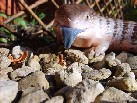

Breed them yourself and you don't have to worry about if they've eaten snail baits or toxic plants. If you want to give it a go, here's what I did. They are common, ordinary garden snails (helix aspersa);
The setup:
* I collected 10 snails from the garden after some rain and set them up in a 125 litre plastic box that cost about $10.
* The solid plastic lid was cut out and replaced with aluminium flyscreen that was soldered onto the plastic and the edges trimmed away.
* They are kept indoors in front of open french doors in a room sheltered by an outside pergola and the daytime temp peaks at about 26C, the nightime temp is about 12-15C. There is no direct sunlight on them but the room does have natural light.
* They are fed every second day on lettuce leaves, cucumber and oats which is dusted once a week with my lizard calcium. (they are relatively inactive during the day, but become active and feed at night).
* I mist them with a spray bottle of tap water about 5-6 times a day, with a focus on the pots to keep the soil wet but not saturated.
* The base of the container is a layer of mulch, and pots of store bought potting mix are included to give them somewhere to lay their eggs, as well as to extract nturients from the soil.
* There's about 4 or 5 earthoworms from the garden thrown in as well, as they eat the snail waste.
* The food plate is replenished every second day, and the whole container is given a rinse and hose out with water and dishwashing liquid once a week.

Mating
* Snails are hermaphrodites so they have both male and female organs, but they need to mate to fertilise the eggs. This means that after mating both the snails can lay eggs.
* They mate alot. ALOT! The mating can take anywhere from 3-4 hours to all day or all night. No need for mood lighting, music or wine.
* They are very social, but when you see them all over eachother they aren't actually mating. It's when they release their sex organs (located at the side of their head .... no, really! ..) that they are mating. Prior to the act they engage in a bit of foreplay, they do a touchy feely thing with their eyes/antennas thingies. It's quite cool to watch, better than anything of telly.
* They'll continue mating. And mating. And mating.

Egg laying
* I found my first eggs approx 3 weeks after observing mating for the first time. These were laid in the mulch substrate in the bottom, but after replacing the larger pots with smaller pots, they have since been despositing them there. The ones laid in the mulch were transferred to a pot.
* The snail burrows into the pot and the eggs are laid about 5cm down in the soil, in a clump of approx 70. This can take 1-2 days.
* The eggs are bright white, perfectly round and slightly translucent.
* I removed the top centimetre or so of soil and covered the pots with glad wrap (or saran wrap, cling wrap, etc) which I pierced all over with a pin, secured with an elastic band.

Incubation, hatching and rearing
* The pots were kept in the same room as the adults but away from the doors.
* I misted them 1-2 times a day, and every 2-3 days I removed the plastic for a few hours. Before replacing the plastic the soil was misted to the point of wet but not saturated.
* The first snail hatched 2 weeks after laying, with the bulk of them hatching in unison the following day, with 1-2 emerging daily for the next 3 days. They are perfectly formed miniatures of an adult snail.


* They were placed in lots of 10 in chinese takeaway containers with a piece of lettuce (the soft outer leaves), a thin slice of cucumber, a few oats and a tablespoon of potting mix sprinkled with calcium, with the lid replaced with glad wrap pierced with a pin and secured with a rubber band, and misted 1-2 times a day.
* After 2 days they were added to a 'nursery', which was a smaller, lower sided plastic container from the $2 shop. The base is a mix of potting mix, washed river sand and calcium.
* The solid plastic lid was drilled all over with holes for ventilation
* Rearing is the same as the adults. Food provided is a mix of lettuce, cucumber, oats occasionally sprinkled with calcium, and the whole lot is misted (with the lid removed) 3-4 times a day.


So, there you go. It's cheap, requires only basic handyman skills, they're low maintenance, require hardly any room and no specialist equipment. If you're in a cool climate it's probably best to wait until spring/early summer. Snails will go into hibernation at temps below 6C and above 30C (and will die under 0C).
Give it a go! Your bluetongues will love you for it!
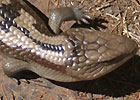

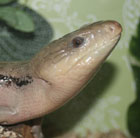




 ) and when we finally got some decent rain he 'rescued' some before I fed them on to the lizards, so now hopefully I will have a good supply.
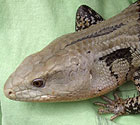



 And I live on acres backing onto bush. Still no snails. And I think there's alot of competition out there from all the smaller skinks and lizards. Used to see the little tiny ones out there but not the past few years.