New heat rock setup

Everything Blue Tongues! Have a question? Just got a BTS and want to introduce yourself? This is the place!
Forum rules
In this forum all are welcome to ask blue tongue skink-related questions, share information, ideas, tips, experiences, and pictures with fellow BTS enthusiasts.
If you are wondering if your BTS is acting normally or might be sick, this is where you can get help with that.
This is also where you can have some FUN while sharing the enjoyment you get from your blueys!
tony4thgen
Bluey Beginner
Bluey Beginner
Posts: 9
Joined: Thu Oct 25, 2007 9:46 am
Country:

New heat rock setup

Postby tony4thgen » Sat Oct 27, 2007 9:24 am

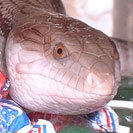
Well last night i went to the pet store and purchased this.Image
i dug out all the wood chips to the bottom of the glass. i then placed the heat rock even with the wood chips so it looks flush.Image
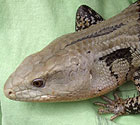
After i cleaned up everything i placed the Rock Cave on the heater and after a hour of setup..this is what i found.Image

So far he is loveing it. Tell me what u guys think.
NomadOfTheHills
The Scout
The Scout
Posts: 1342
Joined: Sun Apr 25, 2004 2:07 pm
Country:

Postby NomadOfTheHills » Sat Oct 27, 2007 9:35 am

While there is little inherently wrong with heat rocks, you just need to monitor the temperature, as older models were known for hot spots, which can burn lizards, who are "too dumb" (not really, there are physiological reasons for it but I digress...). Don't rely on the repticontrol that is built in, use a second thermometer to check the temps.
tony4thgen
Bluey Beginner
Bluey Beginner
Posts: 9
Joined: Thu Oct 25, 2007 9:46 am
Country:

Postby tony4thgen » Sat Oct 27, 2007 9:46 am

This rock heater has a adjustments)high,med,low and i am also going to purchase a internal digi temp
User avatar
Leigh
Leigh of the Law
Leigh of the Law
Posts: 6695
Joined: Thu Nov 23, 2006 4:23 am
Country:
Location: Bristol, England

Postby Leigh » Sat Oct 27, 2007 10:47 am

My heat rock's stat welded shut and the rock got hot enough to split open(years ago), I dont use them any more,the mats are a safer bet.
MMMmmmmm... Something???????
User avatar
LittleFoot
Bluey Devotee
Bluey Devotee
Posts: 1297
Joined: Tue May 22, 2007 5:45 pm
Country:
Location: NE Pennsy

Postby LittleFoot » Sat Oct 27, 2007 1:52 pm

Just be very careful with them... I have heard way to many horror stories with them burning and injuring the lizard, shorting out, and being a fire hazard. I use a tile from a home store (costs about $2) and put it under his basking light, it's cheaper and safer imo.

Your skink has a very cute face.
Pippi
User avatar
MartinsPerson
Bluey Addict
Bluey Addict
Posts: 710
Joined: Sun Sep 04, 2005 11:49 pm
Country:
Location: Corvallis, Oregon
Contact:

Postby MartinsPerson » Sat Oct 27, 2007 2:19 pm

I always worry about both hot spots and the potential for fire. I find it safer to take a piece of black slate and put it under the heat lamp, evenly distributes the heat and doesn't allow for hot spots. Just keep an eye on that hot rock and see how it works out.
1.1 IJ "Baloo", "Bianca"
0.0.1 Northern "Sebastian"
1.1 Kei Island "KeiKei", Sprout"
0.2 chihuahua "Delilah", "Holly"
0.1 quarter horse "Cadence"
0.0.1 A. versicolor "Prism"
User avatar
herp boy
Bluey Enthusiast
Bluey Enthusiast
Posts: 610
Joined: Sun Oct 14, 2007 9:18 pm
Country:
Contact:

Postby herp boy » Sat Oct 27, 2007 8:44 pm

What i did with my leopard gecko is when i found out that heat rocks are bad for them was i cut off the cord and used it for belly heat under there heat lamp when i used heat lamps for them lol
-Michael
┌─┐
┴─┴
ಠ_ರೃ
KyleWeiss wrote:PETA demonstrators love three-day-old warm hamburger fed through a leaf blower showered all over them.

I'm not positive how I know this.

KW
User avatar
Tili
Bluey Beginner
Bluey Beginner
Posts: 63
Joined: Tue Oct 23, 2007 3:09 pm
Country:
Location: Reno, Nevada
Contact:

Postby Tili » Sat Oct 27, 2007 9:11 pm

Personally if I had a heat rock in my tank i would be scared for my BTS life... those things are no good and will never recommend them ever.
0:0:1 Irian Jaya (Tili)
1:0:0 Tom Cat (Mocha)
0:1:0 Cairn Terrier (Lexy)
http://www.youtube.com/watch?v=bR66CEwzXOo - thats mah baby!
User avatar
Hijinks
Bluey Enthusiast
Bluey Enthusiast
Posts: 633
Joined: Tue Sep 26, 2006 4:04 pm
Country:
Location: Nutley, NJ
Contact:

Postby Hijinks » Sat Oct 27, 2007 9:18 pm

I don't think it's a risk worth taking either. :|
User avatar
SailleSkinklover
Bluey Fanatic
Bluey Fanatic
Posts: 2160
Joined: Mon Jul 16, 2007 8:38 pm
Country:
Location: Everett WA
Contact:

Postby SailleSkinklover » Sun Oct 28, 2007 12:07 am

My friends' cobra died very recently due to a power surge that came through her heat rock, fatally burning her. because of that, and so many other horror stories, I don't recommend heat rocks either.
I have a big chunk of red brick from home depot under the basking light. It heats up to the perfect temp and Chuff Chuff absolutely loves it. I never have to worry about power surges, short outs, or uneven heating resulting in potential burns. And, its like a big emory board for his claws too! Added bonus!
1.0. Merauke, Chuff Chuff
0.1.1 Irian Jayas, Nubbin, Marley
0.0.1 Northern, Hobbes
3.1.0.1 White Lined Geckos,CrazyHorse, Dad, Itchy, little female
7.10.17 Crested Geckos, HELP!
0.1.0 Leachie, Francis
1.2.0 Gargoyles, Everton, Ant, Juicebox
1.1.2 African Fat Tails, Burger Butt, Galaxy,t he kids
1.1.0.2 Tokays, Niles, Lillith
User avatar
Tattoo
BT Beldam
BT Beldam
Posts: 6669
Joined: Sun Jul 15, 2007 11:18 am
Country:
Location: Vermont, USA

Postby Tattoo » Sun Oct 28, 2007 7:40 am

No heat rocks in our house. :shake: Too scary. :sweat:
The Crone ∞

1.0 Northern BTS - Tattoo
0.1 Indonesian BTS - Annubis
0.0.1 Silver Tanimbar - Mantic
JWSR
Bluey Beginner
Bluey Beginner
Posts: 198
Joined: Tue Jun 19, 2007 12:43 pm
Country:
Location: Henderson, Kentucky

Postby JWSR » Sun Oct 28, 2007 12:26 pm

NomadOfTheHills wrote:While there is little inherently wrong with heat rocks, you just need to monitor the temperature, as older models were known for hot spots, which can burn lizards, who are "too dumb" (not really, there are physiological reasons for it but I digress...). Don't rely on the repticontrol that is built in, use a second thermometer to check the temps.


Little inherently wrong John?! What studies can you site that led you to that conclusion? I'd like to read them. Have you seen any photos of animals with thermal burns from direct contact heating devices? You are correct that it is physiological, all physiological. These animals don't need localized ventral heat. And you can't possibly monitor a heat rocks' temp 24/7. The cheap wafer type thermostats they put in these heat rocks stick, and just like any of the cheap thermostats, and it's when it will stick, not if. And just how do you monitor the temp of the rock surface while your lizard is on it?

First a fact about reptile heat absorption; they sense heat from above. They absorb most of their body heat through the capillaries on the dorsal side of the body, not through the ventral side. The ventral area of reptiles is highly insensitive to heat, thus the many cases of thermal belly burns to reptiles with heat rocks in their cages. When a reptile gets on a hot rock or asphalt in the wild, the area it's on begins cooling immediately because he's blocking the sun that heated the area, and he's absorbing heat safely from the sun through his dorsal capillaries. A hot rock keeps pumping out the heat. The ambient temperature in close proximity to the heat rock is what attracts them to it, it being the warmest area. And, he's going to just sit there trying to absorb heat from above

Tony, I'm going to post, though I don't know why, some articles I've collected over the years, written by herpetologists, DVM's, and curators in the hope it will save some animals from a very traumatic and painful experience, and maybe even death due to the lack of knowlege and experience of the keeper. You can do what you want with it, either learn, or disregard it. The best thing you can do, is more research on your own.

A blanket statement, like John's above, is going to mislead new young keepers to believe these things are safe for reptiles. They are not. But, then again, what do I know? I'm not attempting to bash you John, but apparently, I don't have the many years of study and practical experience with reptiles that you do. Because It seems that any information I post is immediately argued against by you without backing up your "opinions" with documentation.

Opinions on forums are great, when it comes to setting up cages, decorations, substrates, and variations in food options. That's what we come here for. But opinions are not going to change the physiology of the animal. That's set in stone.

I only try to pass on things that I have personally researched from documented material and studies. I don't guess at it, nor claim to be the expert on it, I'll quote you the doctor or the study source, and let you consider them as the experts on the subject.

So Tony, here’s a few articles that I hope will help you understand a little more about heat absorption in reptiles............

Stephen L. Barten, DVM
From his Burns chapter, in Reptile Medicine and Surgery (Douglas Mader, DVM, ed. W.B. Saunders. 1996. pp. 9-19).

"Thermal burns may result from any source of heat. Heat sources that allow direct contact between the captive reptile and t he source, such as hot rocks, heating pads, or spot lights within the cage, are most often implicated in burn cases. Burns may be prevented by keeping heat sources outside of the cage or shielding them to prevent contact with the captive reptile. Backup thermostats should be wired into the system in case the primary thermostat malfunctions."

Clifford Warwick, Director, Institute of Herpetology and Phillip Arena, School of Veterinary Studies
From their Miscellaneous factors affecting health and welfare chapter, in Health and Welfare in Captive Reptiles (Clifford Warwick, Fredric L. Frye, and James B. Murphy, eds. Chapman & Hall, London. 1996. pp. 263-283).

"An example of apparent but almost certainly misunderstood physical insensitivity and poor thermal environments concerns thermal burns, which occur when captive reptiles come into direct contact with heat sources while attempting to raise their body temperature to preferred levels. The general problem may be exacerbated somewhat by ambient temperatures that are too low and which result in animals being forced to raise their body temperature through extreme proximity to heat sources (J.B. Murphy, pers. comm.). Damage from thermal burns ranges from minor lesions and scarring of the skin to extensive injury such as fusion of the eyelids or burns that extend deep into the body tissues (Frye, 1991a). These injuries may lead to permanent defacement, disability or death.
"The point of particular interest here is that the individual may appear to be oblivious to gross trauma during the period of damaging injury, and in fact insensitive to pain. One current view is that these burns arise after an animal has rested against an inactive heat source, which is then activated and beats up rapidly, causing tissue and presumably local neural damage (Frye, 1991a). Anecdotal accounts suggest that reptiles also settle on already active heat sources and then suffer burns. We propose that a major reason for this behaviour is twofold. First, a large reptile may not be able to attain an optimal body temperature from a small intense heat source such as a lamp. Second, thermal provisions in captivity fail to simulate adequately the thermal diversity of the natural environment.
"In nature the thermal requirements of, for example, a heliotherm are satisfied by a radiant solar source which bathes the entire animal with heat. However, the efficiency with which a body absorbs warmth depends on not only its own properties but also other factors including the intensity of the heat source, the position of the body with respect to the heat source and the proximity and properties of other reflective surfaces (Geiger, 1959). Thus a thermally receptive body is subject to thermal inputs of a multidimensional and heterogeneous nature. Different regions of a reptile's body have different absorbency spectra and thus different heating rates (Heatwole and Taylor, 1987). In captivity, often the only source of heat available is one or two small and usually intense heat lamps. In order to raise their body temperature, reptiles move toward a heat source and bask. Especially where large reptile species and individuals are involved, with associated slower blood circulation (Coulson and Coulson, 1986) and thus heat dispersal, these animals must attempt to raise the temperature of the entire body using primarily diminutive heat sources. Thermal absorption is attempted while continually losing warmth from body surfaces that are not exposed to the heat source and which may, indeed, be in contact with 'cold' surfaces that conduct heat away from animals.
"Compensatory behaviour may include moving closer to the heat source where upon the peripheral nerve endings are damaged and desensitized. Once this occurs, the reptile moves closer still and eventually contacts the heat source in an attempt to raise its body temperature to an optimal level, a point it may never achieve. Thus an unnatural thermal environment and related 'biological confusion' may result in thermal burns. Clearly, more data are needed to clarify the reasons behind this aberrant behaviour, especially in consideration of body size and associated heating requirements of reptiles. If this hypothesis were supported, heliotherms of a small body size in particular, would be less likely to suffer thermal burns because a heat lamp is, to them, a relatively expansive source that may more appropriately 'saturate' their bodies entirely.
"Related considerations include the fact that large lizards are more reflective of solar radiation than smaller individuals (Norris, 1967) and that they heat and cool at a slower rate as a result of a low ratio of surface area to volume. Snakes, by the very nature of their morphology, may be compromised by inadequate thermal provisions."

Susan Barnard, Curator
From her book, Reptile Keeper's Handbook, Chapter 3, The Captive Environment (p. 26; Krieger Publishing Co., Melbourne FL, 1996).

"Snake usually tend to maintain lower body temperatures than do lizards from the same geographical area, and tropical reptiles generally have less tolerance for low temperatures than those from temperate regions. Some reptiles, especially, tropical forest dwellers, may not display heat-avoidance behavior. Do not, therefore, expose these reptiles to basking spots where temperatures would rise above their selected body temperature. Keep all heating devices on the cage exterior to prevent accidental burns. I do not favor heating devices that require animals to make contact for warmth. Such devices do not increase the surrounding temperature, but provide dangerously localized heat on an animal. Reptiles can suffer burns before they become aware that they have been injured when thermostats are set to high or when they fail altogether. Conversely, thermostats that fail may produce no heat at all, and tropical forest dwellers may develop respiratory problems when temperatures fall below the range that is best for them."

Sean McKeown, Curator of Reptiles
From his General Husbandry and Management chapter, in Reptile Medicine and Surgery (Douglas Mader, DVM, ed. W.B. Saunders. 1996. Pp. 9-19).

"Historically, the hot rock has been the most misused heating source. It should never be used as the primary heat source. Hot rocks are made of clay, cement or hard plastic molded or formed around an electric resistor (heating coil). As the electric coil heats up, so does the surrounding mold. The reptile is expected to crawl on or coil around this rock and maintain its body temperature. These rocks do not heat the captive environment.; therefore, a reptile housed in a terrarium heated only with a hot rock will not have the proper warmth to meet its metabolic requirements and may receive sever e burns. Hot rocks are only effective when buried under the substrate an used as a secondary heat source. Most do not have any built-in means to control their temperature output, resulting in an "all or none" heating system. Although these have somewhat standardized construction, they typically vary in size and heat production. What may be an appropriate size and temperature for a large python may be dangerously hot for a small kingsnake. Likewise, a small, buried hot rock suitable as a secondary heat source for a small snake would be less effective for a large-bodied snake. Hot rocks are also notorious for having surface "hot spots" that can reach such high temperatures that severe thermal burns can result. Hot rocks are suitable only for ground dwelling species of snakes and must be insulated from the live animal."
User avatar
Fatal_S
Take Flight
Take Flight
Posts: 8391
Joined: Mon Dec 05, 2005 3:40 pm
Your Facebook name: Mel's Exotics
Country: Canada
Location: Manitoba
Contact:

Postby Fatal_S » Sun Oct 28, 2007 1:48 pm

I've seen way too many reptiles with bad burns. Most stores I know sell them as great devices, and people bring in the dead animal not understanding why it died. The animals have horrible burns and the stores still don't blame the rocks!

I will never, ever recommend a heat rock, in fact in all cases I will recommend not using it and removing any existing ones. They are dangerous and not worth the risk. For the safety of your animal I strongly suggest removing the rock or unplugging it, and using a heat lamp to heat a basking rock. This is more natural and safer.

I am currently working on getting 2 local pet stores to cease carrying heat rocks, and I've convinced 1 already.
User avatar
Bird_Brain
The Happy Hitman
The Happy Hitman
Posts: 4079
Joined: Sat Nov 04, 2006 7:11 pm
Country:
Location: Warren, Indiana

Postby Bird_Brain » Sun Oct 28, 2007 6:21 pm

JWSR wrote:
NomadOfTheHills wrote:While there is little inherently wrong with heat rocks, you just need to monitor the temperature, as older models were known for hot spots, which can burn lizards, who are "too dumb" (not really, there are physiological reasons for it but I digress...). Don't rely on the repticontrol that is built in, use a second thermometer to check the temps.


Little inherently wrong John?! What studies can you site that led you to that conclusion? I'd like to read them. Have you seen any photos of animals with thermal burns from direct contact heating devices? You are correct that it is physiological, all physiological. These animals don't need localized ventral heat. And you can't possibly monitor a heat rocks' temp 24/7. The cheap wafer type thermostats they put in these heat rocks stick, and just like any of the cheap thermostats, and it's when it will stick, not if. And just how do you monitor the temp of the rock surface while your lizard is on it? [Large amount of post cut out due to being a long post :D]


I personally wouldnt use one, however, If you are going to use "evidence" or articles written by professionals, it is always a good idea to use updated and recent information. Not saying that those arent valid, however, in 10+ years, technology has advanced so much.

I dont have any experience using one. I have heard these "horror" stories, but are they still valid? Are the heat rocks produced today as faulty as they were 10 years ago?

I understand that many people will say "Why risk it?" that is a very good point, but some people are more risk takers than others. Recently there was a post about UV ligh burning a BTS's eye lid. Does this mean that we better stop using all artificial sources of UV?

Just something to think about.
Brad
User avatar
Hijinks
Bluey Enthusiast
Bluey Enthusiast
Posts: 633
Joined: Tue Sep 26, 2006 4:04 pm
Country:
Location: Nutley, NJ
Contact:

Postby Hijinks » Sun Oct 28, 2007 6:46 pm

reptileking wrote: Recently there was a post about UV ligh burning a BTS's eye lid. Does this mean that we better stop using all artificial sources of UV?


This information keeps getting misinterpreted, and now it is being misused as fodder for a debate. That's very upsetting to me. How many times do I need to relive that terrible experience, for which my sweet beautiful skink STILL bears scars, in order to clarify the details? http://www.uvguide.co.uk/phototherapyphosphor.htm -- Read read READ. It would be tragic if people use this report as a reason for depriving their reptiles of UV light. It was not caused by a product with a long history and a positive track record. There's no parallel to be drawn here.

As far as risk taking -- if one wishes to take a risk, go skydiving or invest in a dot com. Risk your own self, not an animal's life.
User avatar
Fatal_S
Take Flight
Take Flight
Posts: 8391
Joined: Mon Dec 05, 2005 3:40 pm
Your Facebook name: Mel's Exotics
Country: Canada
Location: Manitoba
Contact:

Postby Fatal_S » Sun Oct 28, 2007 6:49 pm

reptileking wrote:I personally wouldnt use one, however, If you are going to use "evidence" or articles written by professionals, it is always a good idea to use updated and recent information. Not saying that those arent valid, however, in 10+ years, technology has advanced so much.

I dont have any experience using one. I have heard these "horror" stories, but are they still valid? Are the heat rocks produced today as faulty as they were 10 years ago?

I understand that many people will say "Why risk it?" that is a very good point, but some people are more risk takers than others. Recently there was a post about UV ligh burning a BTS's eye lid. Does this mean that we better stop using all artificial sources of UV?

Just something to think about.

Reptileking, there are still cases regularly coming in. A store around me sold many of these rocks as a great item in a big sale. A friend was there, buying a light, when a lady brought in a dead snake with horrible burns on it. The clerk then said it looked like scale rot, and that she should dispose of the body and clean the cage before getting a new reptile. The lady accepted this. My friend was outside the office they were talking in, door open, and heard the conversation, as well as seeing the snake. The lady asked about the heat rock being a problem, the clerk merely said to wash it with bleach and water before getting a new snake. He actually seemed like he was trying to sell the lady the snake right there. My friend gone through checkout at this point, and left. I told him he should have stayed and educated the lady on what had really happened, but he's just not like that. I later found out another of this store's heat rocks had led to a bad burn on a bearded dragon, but was taken to a vet.

This happened over 6 months ago, long before I'd gone to pilot training. The store has stopped selling the heat rocks now. I told this story to other pet stores, and as I said before, 1 has stopped selling them, and 2 more have said they might -.-'

I say this only to prove that cases still do happen. The fact that 2 cases came from this single sale leads me to believe that particular brand (I don't know which) might have been defective. However, that doesn't change that the snake was grotesquely burned by one. Saying this though, I admit I know of a keeper who's used one, without incedent, for several years on his beared dragon. He is convinced it's a great item, and will not change it. In this case I simply hope it doesn't fail on the poor dragon.
User avatar
Bird_Brain
The Happy Hitman
The Happy Hitman
Posts: 4079
Joined: Sat Nov 04, 2006 7:11 pm
Country:
Location: Warren, Indiana

Postby Bird_Brain » Sun Oct 28, 2007 6:58 pm

Hijinks wrote:
reptileking wrote: Recently there was a post about UV ligh burning a BTS's eye lid. Does this mean that we better stop using all artificial sources of UV?


This information keeps getting misinterpreted, and now it is being misused as fodder for a debate. That's very upsetting to me. How many times do I need to relive that terrible experience, for which my sweet beautiful skink STILL bears scars, in order to clarify the details? http://www.uvguide.co.uk/phototherapyphosphor.htm -- Read read READ. It would be tragic if people use this report as a reason for depriving their reptiles of UV light. It was not caused by a product with a long history and a positive track record. There's no parallel to be drawn here.

As far as risk taking -- if one wishes to take a risk, go skydiving or invest in a dot com. Risk your own self, not an animal's life.


Please enlighten me how this information keeps getting misinterpreted? Im sorry if that is upsetting to you, but personally i dont see the big deal :| I guess I am just able to get over things easier than others.
Brad
User avatar
Bird_Brain
The Happy Hitman
The Happy Hitman
Posts: 4079
Joined: Sat Nov 04, 2006 7:11 pm
Country:
Location: Warren, Indiana

Postby Bird_Brain » Sun Oct 28, 2007 7:09 pm

Fatal_S wrote:
reptileking wrote:I personally wouldnt use one, however, If you are going to use "evidence" or articles written by professionals, it is always a good idea to use updated and recent information. Not saying that those arent valid, however, in 10+ years, technology has advanced so much.

I dont have any experience using one. I have heard these "horror" stories, but are they still valid? Are the heat rocks produced today as faulty as they were 10 years ago?

I understand that many people will say "Why risk it?" that is a very good point, but some people are more risk takers than others. Recently there was a post about UV ligh burning a BTS's eye lid. Does this mean that we better stop using all artificial sources of UV?

Just something to think about.

Reptileking, there are still cases regularly coming in. A store around me sold many of these rocks as a great item in a big sale. A friend was there, buying a light, when a lady brought in a dead snake with horrible burns on it. The clerk then said it looked like scale rot, and that she should dispose of the body and clean the cage before getting a new reptile. The lady accepted this. My friend was outside the office they were talking in, door open, and heard the conversation, as well as seeing the snake. The lady asked about the heat rock being a problem, the clerk merely said to wash it with bleach and water before getting a new snake. He actually seemed like he was trying to sell the lady the snake right there. My friend gone through checkout at this point, and left. I told him he should have stayed and educated the lady on what had really happened, but he's just not like that. I later found out another of this store's heat rocks had led to a bad burn on a bearded dragon, but was taken to a vet.

This happened over 6 months ago, long before I'd gone to pilot training. The store has stopped selling the heat rocks now. I told this story to other pet stores, and as I said before, 1 has stopped selling them, and 2 more have said they might -.-'

I say this only to prove that cases still do happen. The fact that 2 cases came from this single sale leads me to believe that particular brand (I don't know which) might have been defective. However, that doesn't change that the snake was grotesquely burned by one. Saying this though, I admit I know of a keeper who's used one, without incedent, for several years on his beared dragon. He is convinced it's a great item, and will not change it. In this case I simply hope it doesn't fail on the poor dragon.

And with human heating pads, no one ever gets burnt. Or new cars never have bad engines.

What Im saying is that with ANYTHING you buy, there are risks. I personally still feed Greenies to my dog. I feel that there is not a threat to her health. Just like some people dont think that heat rocks are a threat to their reptile.

Like I said previously, I personally think that the threat is to high with heat rocks for me to take the risk on. However, some people are willing to take the risk. I think that the Original poster probably got the idea what everyone was saying by the 100th post on how "bad" heat rocks are.
Last edited by Bird_Brain on Sun Oct 28, 2007 7:27 pm, edited 1 time in total.
Brad
User avatar
Fatal_S
Take Flight
Take Flight
Posts: 8391
Joined: Mon Dec 05, 2005 3:40 pm
Your Facebook name: Mel's Exotics
Country: Canada
Location: Manitoba
Contact:

Postby Fatal_S » Sun Oct 28, 2007 7:26 pm

Agreed. The poor poster will probably read this an freak. I merely wanted to answer your recency question, as well as make sure people know it can happen. But yes, there are risks in all technology. Even a regular light bulb has been known to explode.

What are Greenies?
User avatar
Bird_Brain
The Happy Hitman
The Happy Hitman
Posts: 4079
Joined: Sat Nov 04, 2006 7:11 pm
Country:
Location: Warren, Indiana

Postby Bird_Brain » Sun Oct 28, 2007 7:32 pm

Greenies are a dog "treat" that is supposed to be given to help dog (and now cat) oral hygiene. It has been said that they have caused "X" amount of deaths in dogs, due to the dogs choking on them (Choking on something can kill? Imagine that lol). I know how my dog eats and I know that she is not a gulper and chews her food/treats/bones/etc. So I feel that the benefits outweigh the risk, in my situation. Plus, thousands, if not millions, of greenies are sold daily with only ~30 reported deaths (figures are from the last time I "researched" it which was probably a year or so ago).

Ok, sorry for going off topic. Back to heat rock...
Brad

Return to “General Discussion and FAQ”

Who is online

Users browsing this forum: No registered users and 88 guests