As stated in the article linked below, MBD is an umbrella term applied to several conditions. The most relevant paragraphs are reproduced below, but reading the whole article might give more insight as to what is occurring with Gauge.
Has your vet suggested blood tests to determine the level of phosphorous carried in the blood?
Fibrous osteodystrophy
A condition where calcium is mobilized from the bones. The reptiles’ body then forms a build up of tough fibrous tissue to try to reinforce the bone, in the absence of calcium. This is commonly seen in the jaw bones where the muscles continue to pull on the weakened bones, creating a distinctive bowed shape and in some species e.g Green iguanas it can create a rounded, juvenile appearance to the head. This affects the animal’s ability to feed and in advanced cases force feeding via a syringe is required. Areas of hard tissues that result from this condition may appear healthy e.g in the thigh or tail and the owner may well mistake it for muscle, whereas in truth the bones will be highly susceptible to fractures which may not be detected under the tissue layer.
Osteoporosis
This can be caused by dietary deficiencies (including protein deficiency) but also by lack of exercise e.g no climbing areas for arboreal lizards, inadequate floor space for terrestrial species and also if a limb has been attached to a splint due to a previous fracture. As in humans, it results in thinner, lighter bones due to less calcium being deposited in the bones than is reabsorbed into the blood.
Rickets
Affects young reptiles. Can result in severely bowed bones (especially the longer bones). Caused by inadequate calcium or vitamin D.
Osteomalacia
Lower bone density caused by decreased mineralization which is a result of improper calcium: phosphorous ratio. Results in softening of the bones.
Secondary nutritional hyperparathyroidism
Parathyroid hormone or PTH is a hormone that stimulates the bones to release calcium and phosphorous and also stimulates increased absorption of calcium in the digestive tract. This hormone is produced in greater quantities at low levels of serum calcium. Can cause the previous two conditions in young and adult reptiles respectively.
http://www.reptileexpert.org/metabolic-bone-disease/There are 10 kinds of people in the world; those who understand binary and those who do not.


 . Poor baby...this is going to be a long couple of days






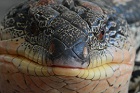
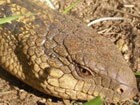
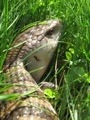

 I had forgotten I posted this
  .
.